
Your Premier Partner for Precision Metal Bending
Partner with us to bend the limits of what’s possible in your next project.
Fabrication Services
-
Bending
-
Pipe Beveling
-
Bolted Connection
-
Cambering
-
Cutting
-
Drilling
-
Galvanization
-
Punching
-
Riveting
-
Slitting
-
Slotting
-
Tapping
-
Welding
Precision Metal Bending Services
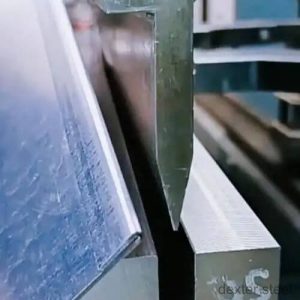
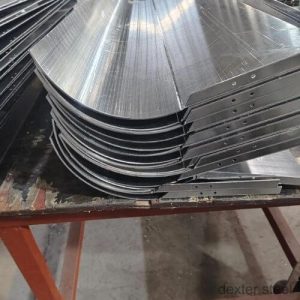
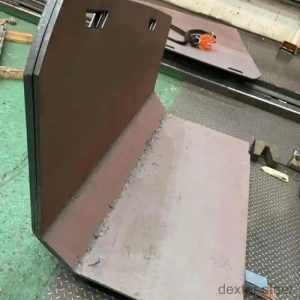
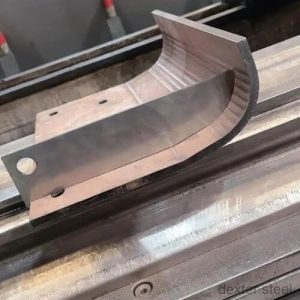
We understand that quality and compliance are non-negotiable. We expertly handle a wide range of materials, from AISI 1018 to ASTM A36 steel, ensuring your fabricated components meet critical regional standards like AS/NZS 3679 in Australia and EN 10025 in Europe. Our process is designed for efficiency, reducing lead times to as little as 2-3 weeks for bulk orders..d green building projects worldwide.
Steel Supply for Demanding Global Applications
We supply a comprehensive inventory including abrasion-resistant AR400/500 plates, structural beams (IPE, HE, UB), and high-yield reinforcement bars. Sourced from premier mills, our materials consistently meet the stringent metrics required for construction, mining, and heavy machinery sectors across the globe.
Project Portfolio
Related Industry Terms
A ratio used in sheet metal bending to calculate the flat pattern length by locating the neutral axis within the material. It is essential for determining the correct amount of material needed before the bend is made.
The inside radius of a bent section. Maintaining a consistent and appropriate bend radius (e.g., a minimum radius of 1x material thickness for mild steel) is vital to prevent material failure like cracking.
A non-alloy quality structural steel with a minimum yield strength of 355 MPa. This is a fundamental grade in European standards, offering good cold bending properties for construction and engineering projects.
A ratio used in sheet metal bending to calculate the flat pattern length by locating the neutral axis within the material. It is essential for determining the correct amount of material needed before the bend is made.
The inside radius of a bent section. Maintaining a consistent and appropriate bend radius (e.g., a minimum radius of 1x material thickness for mild steel) is vital to prevent material failure like cracking.
A non-alloy quality structural steel with a minimum yield strength of 355 MPa. This is a fundamental grade in European standards, offering good cold bending properties for construction and engineering projects.
Frequently Asked Questions
What is your standard tolerance for bent parts?
We typically hold a standard bending tolerance of ±1° on angles and ±0.5mm (±0.020″) on linear dimensions. Tighter tolerances can be achieved for critical applications upon request.
What is the minimum bend radius you can achieve?
The minimum inside bend radius depends on the material type, grade, and thickness. For common mild steels like A36, we can often achieve a bend radius equal to the material thickness (e.g., 1T). More ductile materials allow for tighter radii.
How do you handle springback in your bending process?
Our CNC press brakes are programmed to automatically over-bend to compensate for springback, which is predicted based on the material’s yield strength and thickness. This ensures the final bend angle meets your specified geometry.
Can you bend pre-fabricated or welded components?
Yes, we routinely bend pre-cut, machined, or even welded assemblies. We plan the bending sequence carefully to avoid interference with existing welds or features.
We typically hold a standard bending tolerance of ±1° on angles and ±0.5mm (±0.020″) on linear dimensions. Tighter tolerances can be achieved for critical applications upon request.
The minimum inside bend radius depends on the material type, grade, and thickness. For common mild steels like A36, we can often achieve a bend radius equal to the material thickness (e.g., 1T). More ductile materials allow for tighter radii.
Our CNC press brakes are programmed to automatically over-bend to compensate for springback, which is predicted based on the material’s yield strength and thickness. This ensures the final bend angle meets your specified geometry.
Yes, we routinely bend pre-cut, machined, or even welded assemblies. We plan the bending sequence carefully to avoid interference with existing welds or features.