
Precision Internal Threads for Reliable Assembly and Fastening
Ensure every bolt screws in perfectly with Dexter Steel’s precision metal tapping services.
Fabrication Services
-
Bending
-
Pipe Beveling
-
Bolted Connection
-
Cambering
-
Cutting
-
Drilling
-
Galvanization
-
Punching
-
Riveting
-
Slitting
-
Slotting
-
Tapping
-
Welding
Tapping Technology for Consistent, High-Quality Threads
We create clean, accurate, and strong internal threads in your components, eliminating assembly issues and ensuring the integrity of your fastened connections. From prototype batches to high-volume production runs, our expertise guarantees threads that meet or exceed industry standards
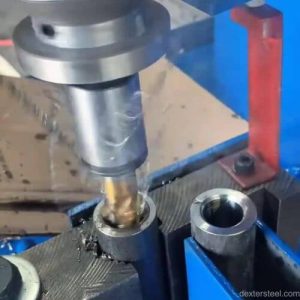
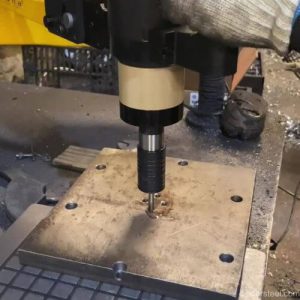
Our equipment features synchronized spindle feed (rigid tapping) and tension/compression tap holders to precisely match the tool’s feed to the thread pitch, preventing cross-threading and tap breakage.
Across Materials and Global Standards
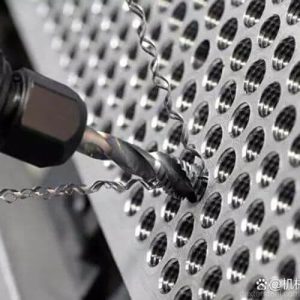
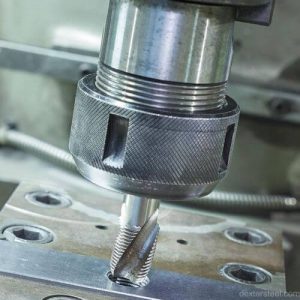
A successful thread is defined by its form, fit, and function. Our technicians are experts in selecting the right tap geometry (e.g., spiral point, spiral flute) and cutting parameters for each material globally.
Project Portfolio
Related Industry Terms
A free-machining carbon steel. The added lead acts as a lubricant, significantly improving tap life and surface finish, making it ideal for high-volume tapping operations.
The length of the fully formed internal thread. Achieving full thread depth to specification is critical for ensuring the bolt can develop its full tensile strength.
The cutting tool used to create internal threads. It has cutting edges and flutes for chip removal. Types include taper, plug, and bottoming taps for different stages of threading.
A form of wear caused by adhesion between sliding surfaces, common when tapping stainless steel or aluminum. It is mitigated by using sharp tools, slow speeds, and lubricant.
A free-machining carbon steel. The added lead acts as a lubricant, significantly improving tap life and surface finish, making it ideal for high-volume tapping operations.
The length of the fully formed internal thread. Achieving full thread depth to specification is critical for ensuring the bolt can develop its full tensile strength.
The cutting tool used to create internal threads. It has cutting edges and flutes for chip removal. Types include taper, plug, and bottoming taps for different stages of threading.
A form of wear caused by adhesion between sliding surfaces, common when tapping stainless steel or aluminum. It is mitigated by using sharp tools, slow speeds, and lubricant.
Frequently Asked Questions
What is the difference between a cut thread and a formed thread?
A cut thread (tapping) removes material to create the thread. A formed thread (roll tapping) displaces material without creating chips, resulting in a stronger, work-hardened thread but requires a different pre-drill size and more force.
Can you tap blind holes?
Yes, we specialize in tapping blind holes (holes that do not go through the material). We use spiral flute taps to effectively evacuate chips and ensure full thread depth to the bottom of the hole.
What materials are most difficult to tap?
Stainless steels (especially 304 and 316) and high-temperature alloys are the most challenging due to their tendency to work-harden and gall, requiring specialized tools and techniques.
Do you offer thread gauging for quality control?
Absolutely. We use Go/No-Go thread plugs gauges to ensure every threaded hole meets the specified class of fit (e.g., 2B, 6H), providing certified quality for your assemblies.
A cut thread (tapping) removes material to create the thread. A formed thread (roll tapping) displaces material without creating chips, resulting in a stronger, work-hardened thread but requires a different pre-drill size and more force.
Yes, we specialize in tapping blind holes (holes that do not go through the material). We use spiral flute taps to effectively evacuate chips and ensure full thread depth to the bottom of the hole.
Stainless steels (especially 304 and 316) and high-temperature alloys are the most challenging due to their tendency to work-harden and gall, requiring specialized tools and techniques.
Absolutely. We use Go/No-Go thread plugs gauges to ensure every threaded hole meets the specified class of fit (e.g., 2B, 6H), providing certified quality for your assemblies.