
Achieve Structural Integrity with Precision Cambered Beams
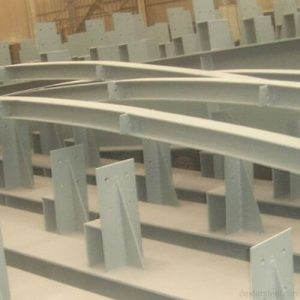
We specialize in inducing precise, calculated camber into beams to counteract dead load sagging and ensure long-term structural stability
Fabrication Services
-
Bending
-
Pipe Beveling
-
Bolted Connection
-
Cambering
-
Cutting
-
Drilling
-
Galvanization
-
Punching
-
Riveting
-
Slitting
-
Slotting
-
Tapping
-
Welding
Engineered for Load & Code Compliance
Our service guarantees your beams perform as designed from day one, providing peace of mind and a flawless final build. Partner with us for cambering that meets the most stringent global standards. Request a quote for your project’s specific requirements.
Advanced Cambering Techniques for Superior Results and Efficiency
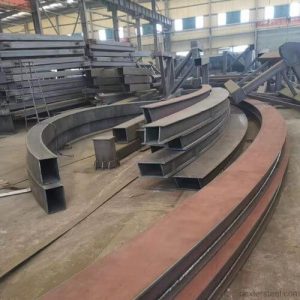
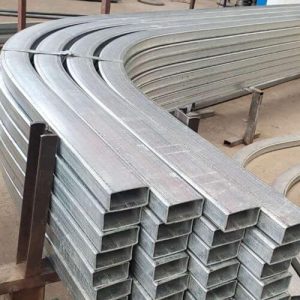
We utilize state-of-the-art cold cambering methods, primarily using hydraulic presses and roller systems, to bend beams to the desired radius without compromising the material’s properties. This process is ideal for common sections like W-beams, UB, and UC. For complex projects, we perform heat cambering (using controlled thermal induction) to achieve specific curvatures in thicker sections. Our quality control includes laser scanning and template verification, ensuring the camber profile is within a tight tolerance of ±L/9600 (where L is the beam length), far exceeding typical industry requirements and ensuring perfect fit and performance.
Project Portfolio
Related Industry Terms
The intentional, slight upward curvature built into a beam or girder to compensate for anticipated deflections under dead load (the weight of the structure itself) and superimposed dead loads.
The process of bending a beam to a desired curvature at ambient temperature using mechanical force from hydraulic presses or rollers. This is the most common and efficient method.
A method where targeted heat is applied to specific areas of the beam flange. As the heated material cools and contracts, it induces a permanent camber. Used for heavy sections or complex curves
A detailed drawing supplied by the engineer or fabricator that specifies the exact magnitude of camber at specific points along the length of the beam, serving as the guide for fabrication
The intentional, slight upward curvature built into a beam or girder to compensate for anticipated deflections under dead load (the weight of the structure itself) and superimposed dead loads.
The process of bending a beam to a desired curvature at ambient temperature using mechanical force from hydraulic presses or rollers. This is the most common and efficient method.
A method where targeted heat is applied to specific areas of the beam flange. As the heated material cools and contracts, it induces a permanent camber. Used for heavy sections or complex curves
A detailed drawing supplied by the engineer or fabricator that specifies the exact magnitude of camber at specific points along the length of the beam, serving as the guide for fabrication
Frequently Asked Questions
Why is cambering necessary for steel beams?
Camber is added to long-span beams to pre-compensate for deflection. Once the dead load (like concrete slabs) is applied, the beam straightens to its designed position, preventing a visible sag.
What tolerances can you achieve on camber?
We typically meet or exceed AISC standards, holding camber tolerances to within ±L/9600, where L is the beam length. For a 30ft beam, this is a tolerance of less than 3/8 inch.
Do you provide certification for the cambering process?
Yes, we provide Mill Certificates for the steel and can supply documentation confirming the camber was induced according to the specified diagram and relevant standard (AISC, AS, or EN).
Camber is added to long-span beams to pre-compensate for deflection. Once the dead load (like concrete slabs) is applied, the beam straightens to its designed position, preventing a visible sag.
We typically meet or exceed AISC standards, holding camber tolerances to within ±L/9600, where L is the beam length. For a 30ft beam, this is a tolerance of less than 3/8 inch.
Yes, we provide Mill Certificates for the steel and can supply documentation confirming the camber was induced according to the specified diagram and relevant standard (AISC, AS, or EN).